Materials · 7 min read
Builder gel, liquid gel or polygel: what to extend with
Three products that do the same job in three different ways. How they behave in the hand, how much filing they leave behind and when each one pays off.
Updated 2026-09-23
Why the choice matters
Any of the three will extend and reinforce. The difference is not whether the set lasts — prepped properly, all three do. The difference is how long the service takes, how much you file after curing and how the product behaves on a day when the salon is running late.
So the choice should follow your own hand and the clients you actually see, not what is trending. Below each product on its own, then a short guide to what suits what.
Builder gel: a thick medium you shape yourself
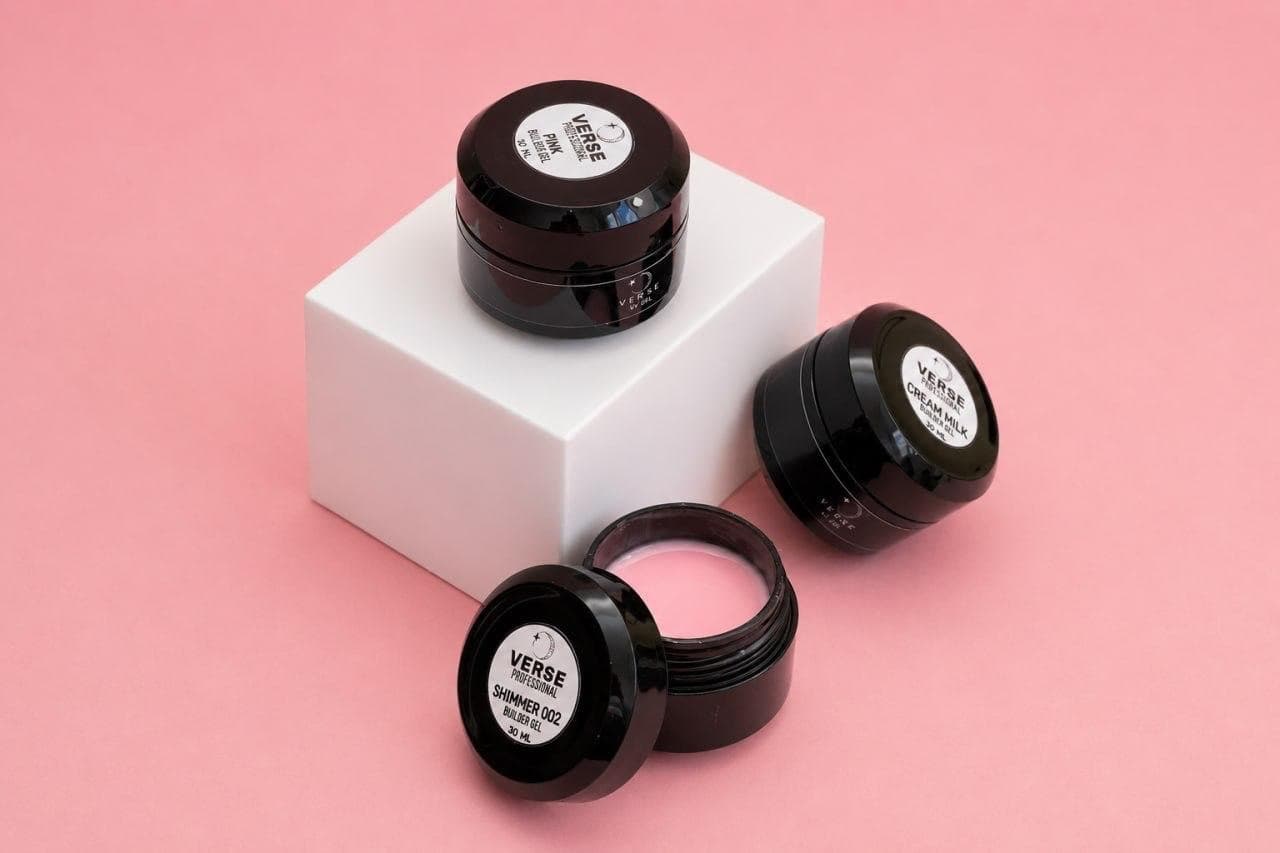
Builder gel is the thickest of the three. In the jar it holds its shape, it does not flood the sidewalls and it waits until you spread it with a brush exactly where you want it. Hence its main advantage: you build the apex precisely, both the height and the distribution, and you are not racing the clock.
Cover shades solve two problems at once, structure and the colour of the plate. The line between the bed and the free edge disappears under the product, so a grown-out nail does not look grown out as quickly.
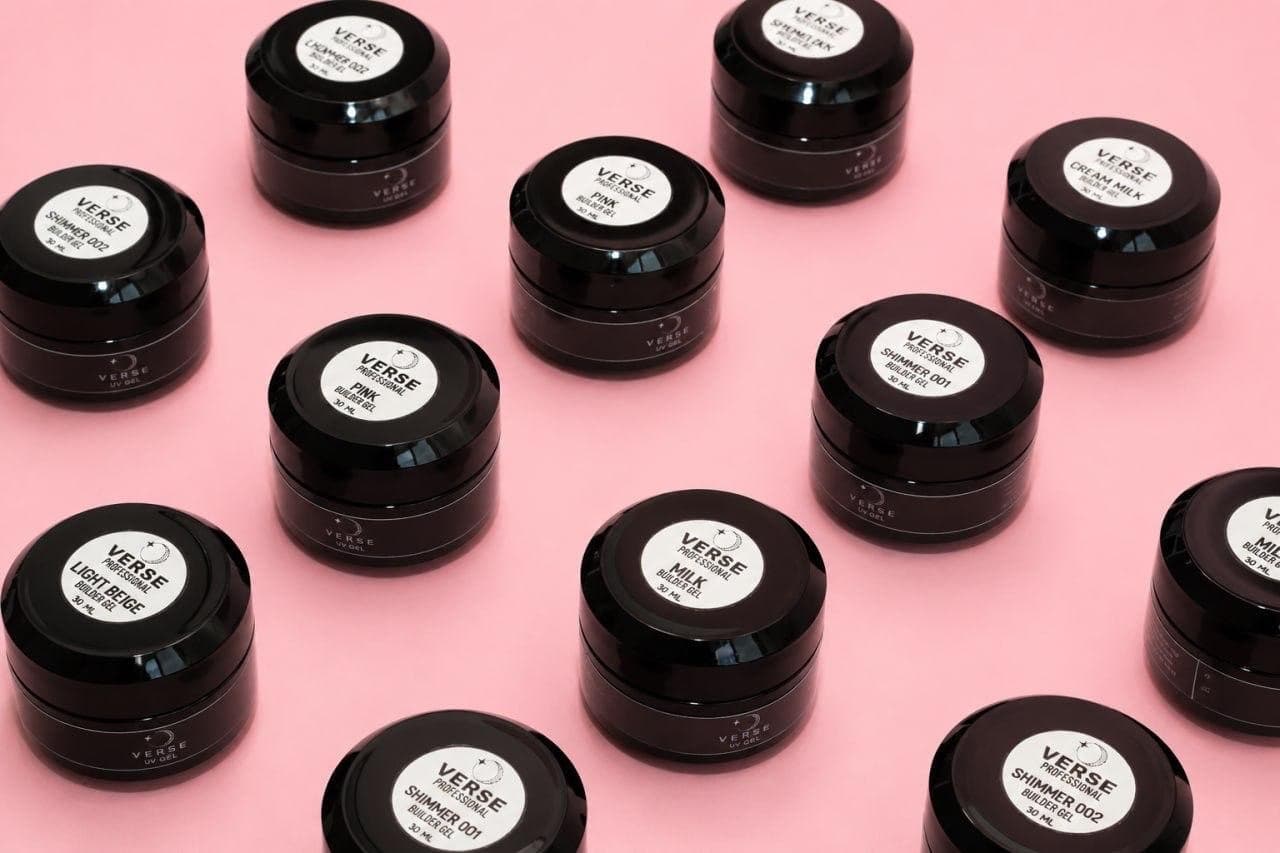
The price for that control is time. A thick medium has to be spread by hand and filed into shape after curing. In the VERSE range, builder gel comes in nine shades from clear to full cover, in a 30 or 50 ml jar.
- Best control over apex and thickness
- Cover shades even out the colour of the plate
- The most filing after curing
- Suits longer extensions and work on a form
Liquid gel: self-levelling instead of filing
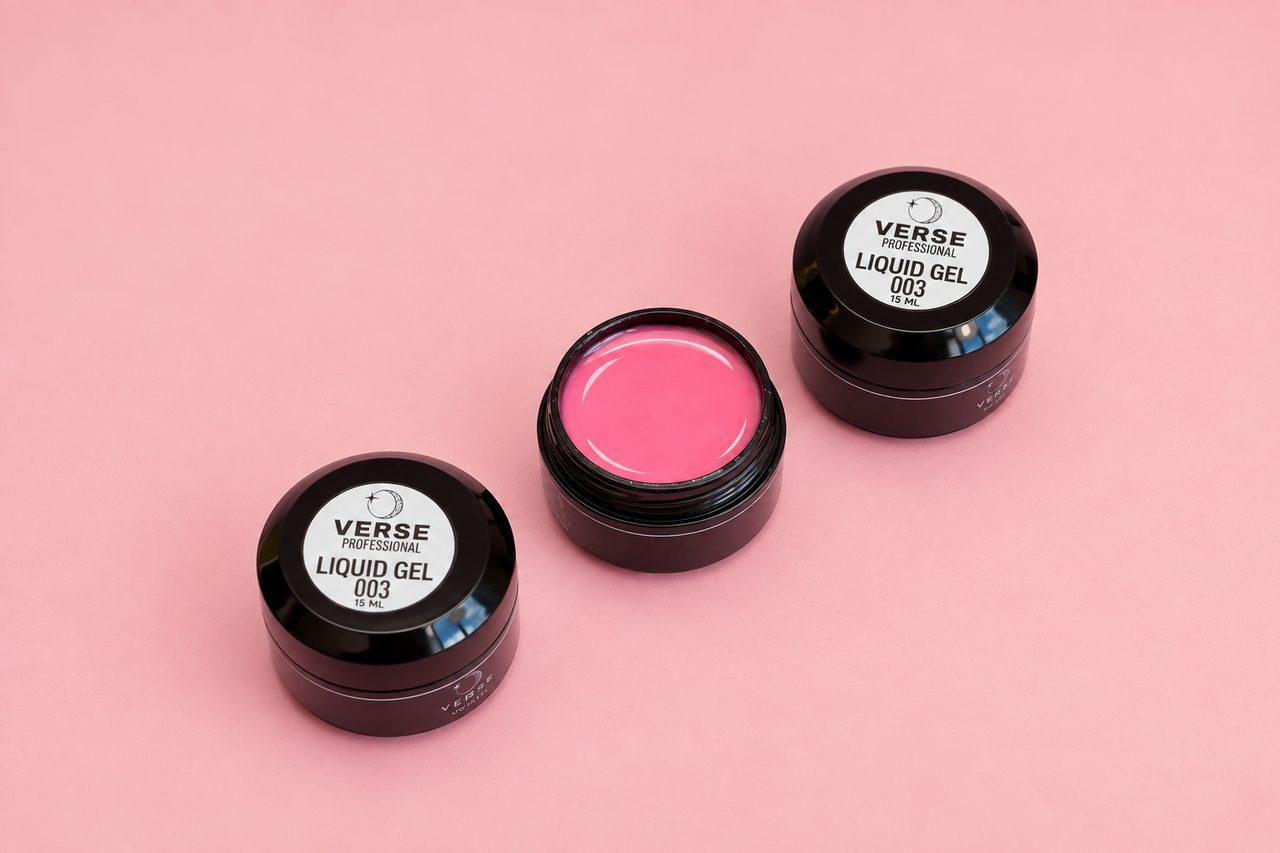
Liquid gel is a one-phase product that levels itself once applied. You do not spread it — you place a bead and let it settle. After curing the surface is smooth and most of the filing is gone.
That makes it the product for fast reinforcement and for evening out an uneven plate. For long extensions it is the weaker choice: anything that levels itself holds its shape on a form less well, and the apex is harder to build.
The jar is smaller than builder gel, 15 ml, because less of it goes on each nail.
- A level surface with no hand-spreading
- The least filing of the three
- Harder to build an apex with
- Suits reinforcement and evening out the plate
Polygel: acrylic control without the smell
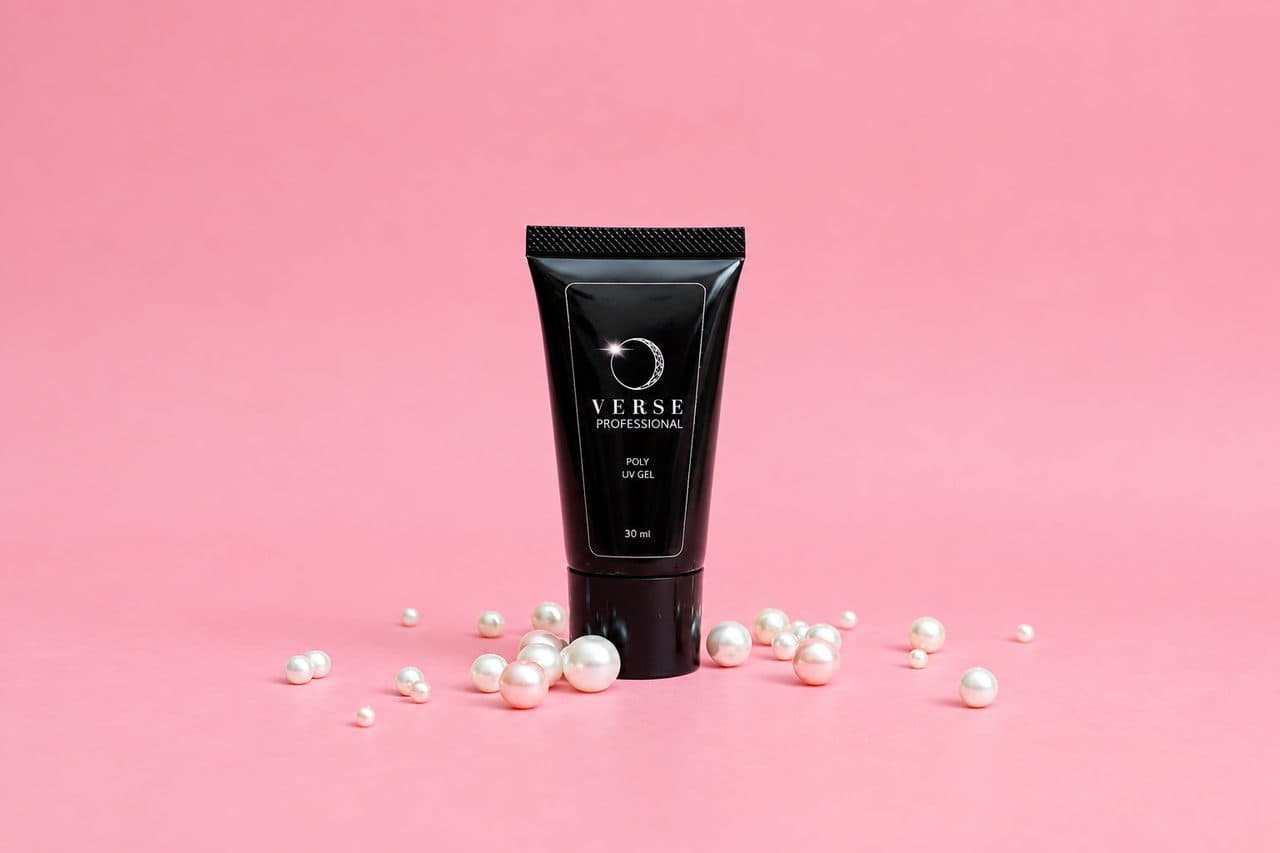
Polygel, elsewhere acrygel, sits between acrylic and gel. You pinch off a bead with a spatula, place it on the nail and press it into shape. The product does not move on its own, so unlike gel it will not run anywhere, even on a client who cannot keep her hand still.
Compared with acrylic there is no smell and no counting down until the product sets. You shape until you are happy, and only then cure.
It comes in a tube, 30 ml at VERSE, in eight shades including clear. A full set uses roughly half as much product as builder gel, because you work with a bead rather than layers.
- The product stays put, so there is no rush
- No smell, unlike acrylic
- You need a spatula and slip solution or alcohol
- Suits both forms and tips
What to pick for the work you do
The short rule: the longer the extension and the harder the shape, the thicker the product. That alone decides most cases.
- Reinforcing the natural nail and evening out the plate — liquid gel
- Extensions up to two millimetres and camouflage — a cover builder gel
- Longer extensions, almond, ballerina — polygel or builder gel
- A client who cannot keep still — polygel
- A thin, soft plate — liquid gel or a softer builder gel
Sizes and recommended retail prices for the whole range are in the overview on the home page.
Where it usually goes wrong
Most redos are not caused by the product but by the steps around it. These four come up most often.
- A poorly dehydrated plate and a skipped primer. On oil, the product holds until the first shower.
- Too thick a layer at once. Thick gel does not cure all the way through and the client feels heat.
- An apex set too far from the cuticle. The nail then breaks exactly where it should have been strongest.
- Product on the cuticle. Acrylates touching skin is the most common route to an allergy, and that applies to all three.
Where to start if you are not sure
A clear builder gel and one cover shade handle most everyday work. Liquid gel earns its place once you have clients who come only for reinforcement. Polygel makes sense once you start doing longer shapes.
If you are starting from nothing, a starter kit works out cheaper: base, primer, top coat, colours and a sculpting product arrive together instead of one order at a time.
Frequently asked
- Can builder gel be used just to reinforce a natural nail?
- Yes, in a thin layer. The thick product evens out ridges and strengthens the plate; just expect more filing after curing than with liquid gel.
- What is the difference between polygel and acrygel?
- Nothing substantial — two names for the same type of product. Brands differ in thickness and in how long the product stays workable, not in principle.
- Do I need a form for liquid gel?
- Not for reinforcement. For extensions yes, but liquid gel is not ideal for real length: it holds its shape on a form less well.
- How long does a set from each product last?
- Wear time comes down to plate prep and layer thickness more than the product itself. Prepped properly, all three come back for an infill after three to four weeks.