Technique · 6 min read
Which nail base to choose: rubber, camouflage, French or foil
The base decides how long a set lasts more than the colour does. How the types differ, when each one fits and how many coats actually help.
Updated 2026-09-23
What a base actually does
A base has three jobs, and colour is not one of them. It bonds the product to the nail plate, it evens out ridges so colour does not sink into them, and it absorbs the tension that builds during curing. When a set lifts at the sidewalls, the fault is almost always here, not in the top coat.
So it is worth choosing the base for the client's plate, not for the colour going over it. There are several types, differing in thickness and in what else they do.
Rubber base: thicker and springier, levels the plate
A rubber base is thicker than a classic one and levels itself after application. On thin, soft nails it works as a shock absorber: it flexes with the plate instead of cracking on it.
It is the default choice when you need neither an effect nor colour. It goes under everything else and copes with an uneven plate without filing.
Camouflage and coloured base: colour and levelling in one coat
A tint or camouflage base carries pigment in the product itself. In practice it saves a coat of colour: apply, cure, and the plate is already covered and level.
It pays off most on nude manicures and on the French, where the underlay is the result. The second use is speed: base, top coat, done.
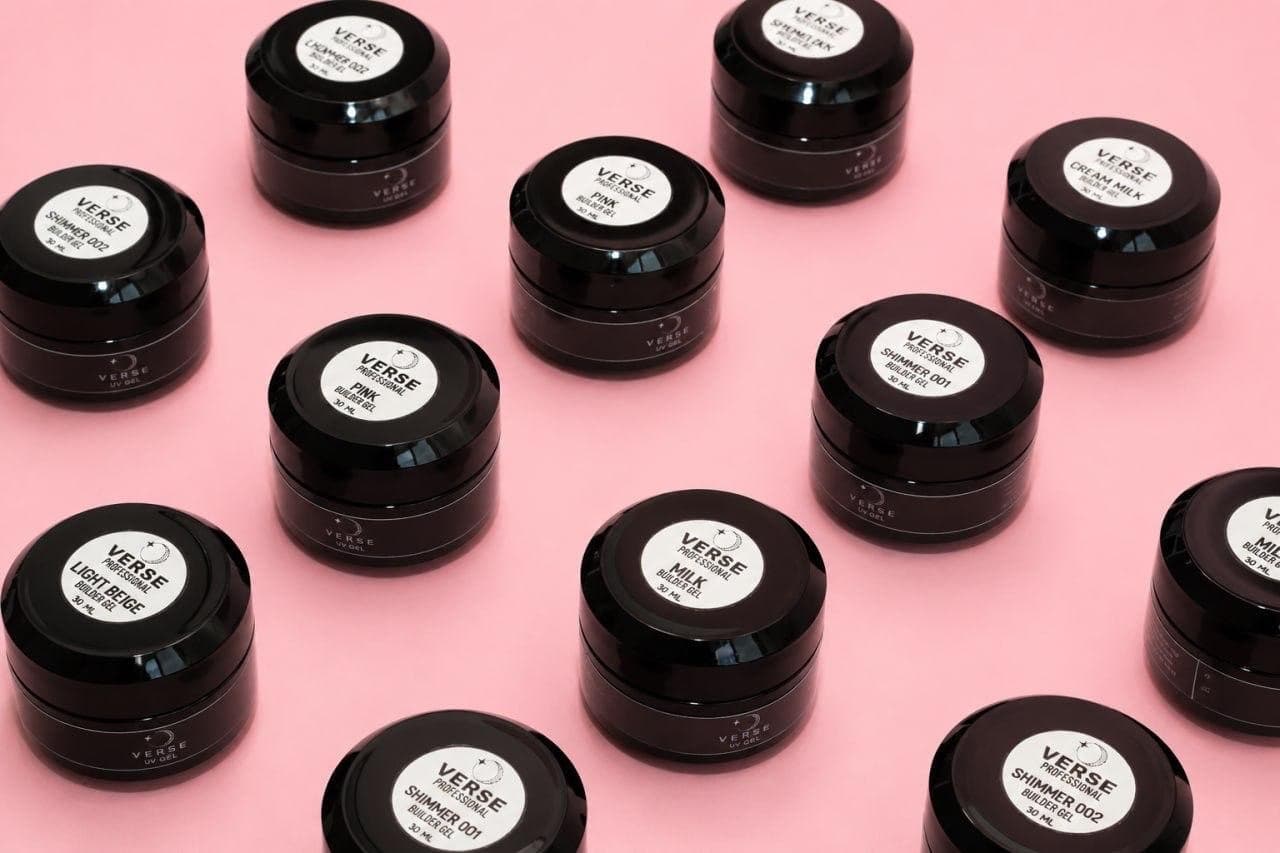
In the VERSE range Tint Base comes in ten shades, so the tone is chosen to suit the plate rather than from whatever is left.
French base: a milky underlay for the smile line
A French base is thicker and milkier than a camouflage one. Its job is not to cover completely but to give the plate an even milky tone on which a white smile line reads clean rather than grey.
Four shades cover most skin tones. The difference between them is the warmth of the tone, not the opacity.
Reflective and foil bases: an effect with no extra step
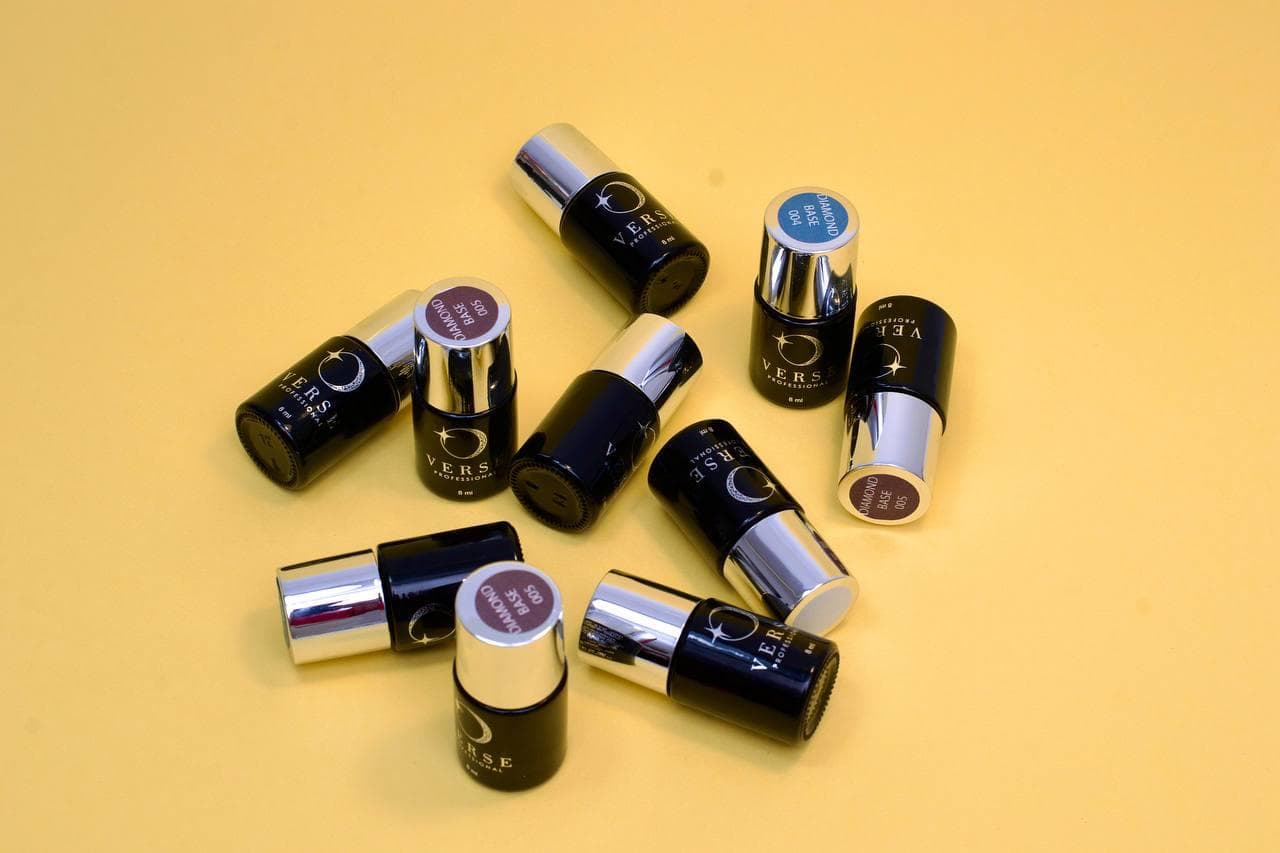
A Diamond base is light reflective. Under direct light, typically a phone flash, the whole nail lights up. It works on its own as an effect or as an underlay for sheer shades.
A Potal base carries metallic flakes in the product itself. The effect that otherwise needs separate foil and separate adhesive happens in one stroke of the brush.
Both are an addition, not a replacement. Adhesion from the primer and clean plate prep are still required underneath.
How many coats, and where it goes wrong
One thin coat for adhesion, a second for levelling if the plate is uneven. More coats do not improve wear, they only raise the risk that the product does not cure all the way through.
- Base on the cuticle and in the sidewalls. The most common cause of lifting and the most common route to an allergy.
- A skipped primer on difficult plates. A base alone does not replace adhesion.
- Too thick a first coat. A thin coat pressed into the plate holds better than a thick one laid on top.
- Filing too deep. The goal is a matte plate, not a thinner one.
The short version
If you would rather not read all of it, this is enough.
- Thin, soft plate — rubber base
- Nude manicure and fast work — camouflage Tint Base
- French manicure — French Base
- An effect with no extra step — Diamond or Potal Base
A comparison table of every base, prices included, is on the home page in the range overview.
Frequently asked
- Do I always need a primer under the base?
- Not always, but on sweaty, oily and difficult plates yes. An acid-free primer dehydrates the plate slightly so the base holds until the infill.
- Can a camouflage base be worn on its own without colour?
- Yes, that is one of its main uses. Base, cure, top coat, and you have a nude manicure in a fraction of the time.
- Why does my base lift at the sidewalls?
- Almost always because of prep: leftover pterygium, oil on the plate, or product laid onto the cuticle. Changing base only makes sense once those three are right.
- How is a rubber base different from a classic one?
- Thickness and flex. A rubber base is thicker, levels itself and copes better with a thin nail bending. A classic base is runnier and assumes the plate is already flat.